B.C. Covers the Process. Every Other Province Covers the Drug.
Global News reports B.C. is the only province not covering Luspatercept for myelodysplastic syndrome. The NDP government’s answer is process.
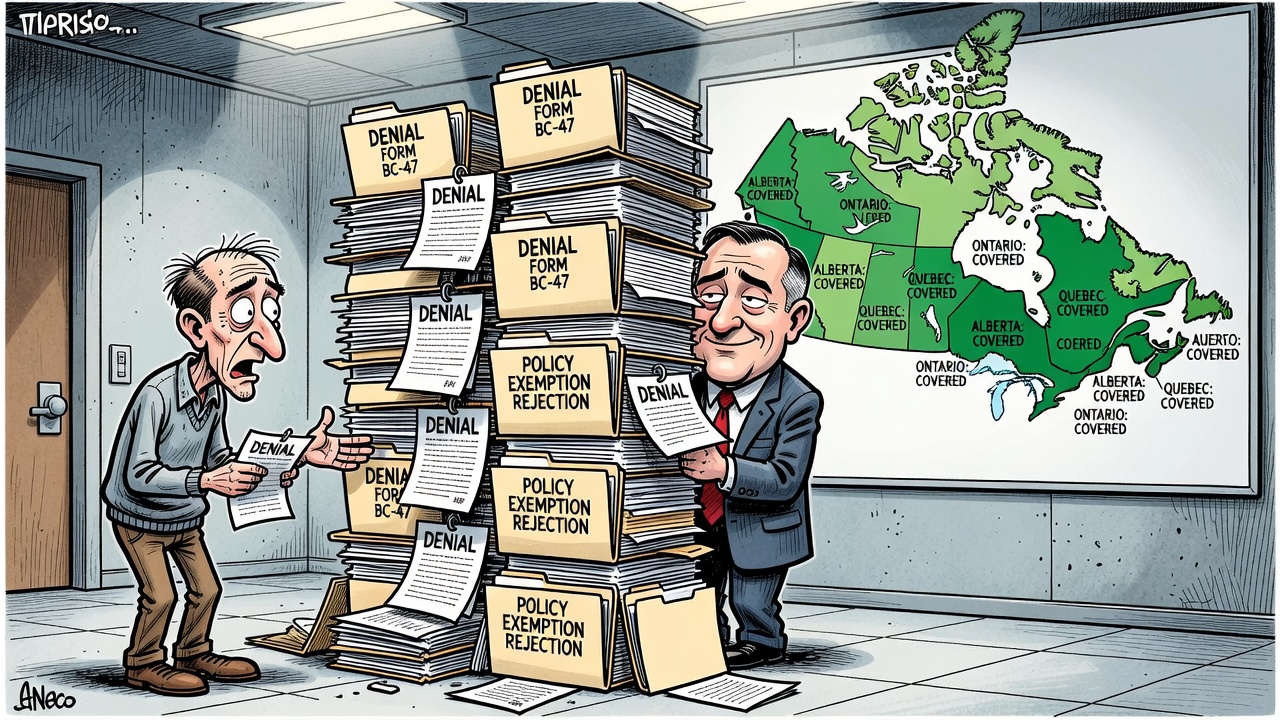
iVoteNDP editorial cartoon, June 8, 2026.
When every other province has found a way to cover a rare-disease drug, B.C. cannot hide behind the word “process” and call that compassion.
British Columbia’s health-care crisis is not only about emergency rooms, surgery backlogs or family doctors. It is also about the quieter cases where a patient is told that a treatment available elsewhere in Canada is still out of reach at home.
Global News reported on April 14 that B.C. is the only province in Canada that does not cover Luspatercept for myelodysplastic syndrome, a rare blood disorder. The story focused on Joey Kerr, a B.C. patient whose family appealed for coverage and was denied. Global reported the drug costs about $200,000 per year per patient.
This is not a claim that Luspatercept is a cure, and it is not a claim that every patient would qualify. The point is narrower and harder for the NDP to dodge: according to Global’s reporting, other provinces cover it for this condition, while B.C. does not.
The B.C. government’s own PharmaCare limited-coverage page shows Luspatercept has coverage criteria in B.C. for beta thalassemia. But under the heading for myelodysplastic syndrome, the page states that the drug is not eligible for coverage for that indication. That is the policy gap at the centre of this story.
The human reason it matters was stated plainly by Cindy Anthony, executive director of the Aplastic Anemia & Myelodysplasia Association of Canada, who told Global that the drug can reduce dependence on blood transfusions and questioned why B.C. is out of step with the rest of the country. That benefit claim belongs to the association and should be weighed as such — but the coverage disparity is a public policy fact British Columbians deserve to understand.
Health Minister Josie Osborne’s response, as reported by Global, was to point to B.C.’s Fair PharmaCare system and the province’s evidence-based Independent Advisory Drug Benefit Council process. Evidence matters. Public dollars matter. But a process that leaves B.C. alone in denying coverage for a drug other provinces have approved is not automatically vindicated by being called evidence-based.
The Eby government spends billions, announces plans constantly, and insists it is protecting public health care. Yet in this case, a patient with a serious blood disorder is left watching other Canadians receive coverage her province will not provide.
That is the accountability question. If B.C.’s process is better, the government should explain why every other province is wrong. If the process is failing patients, the NDP should fix it. What it should not do is ask British Columbians to confuse paperwork with care.